Iowa Gambling Task: The Test That Sees What Your IQ Can't
You probably know a trader like this. Smart, well-read, breaks down the market better than half the analysts, can spend an evening explaining macro, liquidity, and why yesterday's move was obvious. And yet somehow his account doesn't grow. Maybe you even see him in the mirror.
How does that happen? How can a person be genuinely intelligent — and still make bad decisions with money, over and over? The intellect is there, the knowledge is there, the experience keeps piling up, and the results stubbornly refuse to match the level of the head.
Science once took that question seriously. And the answer turned out to be somewhere no one was looking: it's not about how much you know, but about how you decide when nobody knows the rules. There's even a dedicated test for it — it's thirty years old, and it still sees what no intelligence test can.
What the Iowa Gambling Task is
In the nineties, researchers Antoine Bechara and Antonio Damasio kept running into strange patients. After damage to one particular area of the brain, these people remained perfectly intelligent: memory intact, logic intact, IQ tests passed brilliantly. But their lives were falling apart — they were losing money, businesses, families, making one catastrophic decision after another. Every classic test said: this person is fine. Reality said the opposite.
That's where the Iowa Gambling Task was born — a test built not like an exam, but like a game. In front of the person are four decks of cards. Every card brings a win or a loss, but the rules are hidden: nobody tells you that two decks look generous while quietly bleeding you out over the distance, and the other two are more modest but feed you steadily. The only way to figure it out is to draw cards and learn from what happens.
Healthy people gradually sense the catch and drift toward the "good" decks. Those patients — smart, logical — kept coming back to the bad ones. Again and again. The test caught what everything else was missing: the ability to learn from outcomes and to feel risk before it ruins you. Since then, the IGT has become one of the most widely used tools in decision science: thirty years of research, thousands of publications.
The body knows before the head does
And now the most beautiful finding from all that research. During the test, researchers measured people's skin response — that microscopic "sweat" a lie detector runs on. And they discovered something slightly unsettling: long before a person could explain in words which decks were bad, their skin began reacting every time the hand reached for the wrong one.
The body already knew. The head didn't yet.
Damasio called these somatic markers: your risk-assessment system works below the level of words. It accumulates the experience of losses and wins and sends signals — bodily, fast, without explanations — before consciousness has time to form a single thought. That's exactly why asking yourself "how do I assess risk?" is useless: the part of you that answers questions simply has no access to the part that assesses risk. One talks, the other decides — and they barely know each other.
For a trader, something practical follows from this. Everything you can say about your relationship with risk is a translation from a language you can't hear. But the original can be measured. That's exactly what the test does: it doesn't ask — it watches where your hand reaches.
Why this is a test about trading
Look at the construction of the IGT one more time. Four sources of outcomes. Hidden rules. Some look generous but ruin you over the distance; others are modest but feed you. Information is scarce, every move costs money, and your only teacher is your own result.
That's the market. Literally. Instruments, strategies, setups — the same decks with unknown rules. Some glitter seductively and bleed you out over the distance; others are boring and profitable. And the central question of trading sounds exactly like the central question of the test: how many draws will it take you to feel the bad deck — and will you have enough in you not to keep going back to it?
Some people feel it quickly and adjust. Others keep drawing from the bad deck because it's "due to pay out any moment now" — recognize the tone? It's the same hand that averages down a losing position and keeps returning to a strategy that hasn't worked in six months. The IGT measures precisely this difference between people — the speed at which experience turns into behavior.
The Four Doors — the same science, adapted for traders
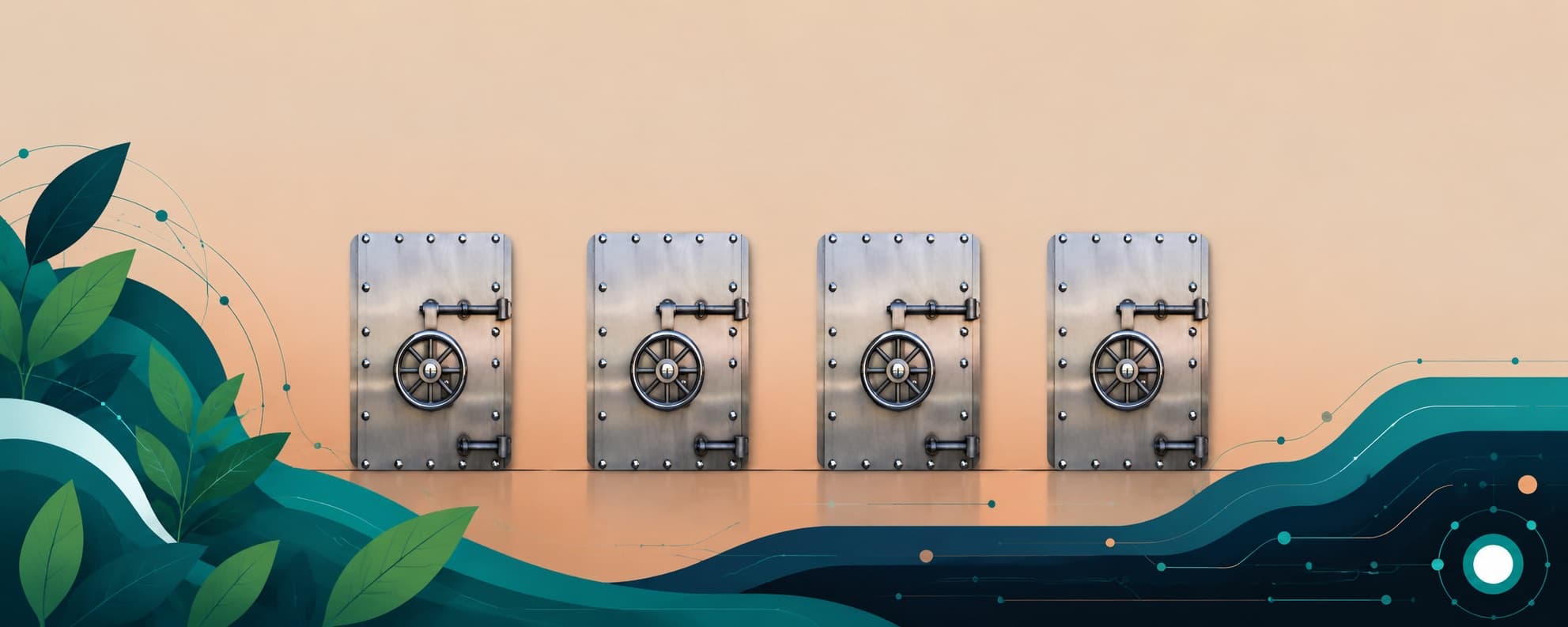
At NST, this test is called The Four Doors. It's an adaptation of the Iowa Gambling Task — the same proven construction, rebuilt around a trader's decisions. Four doors, hidden rules, your moves.
While you play, we're not reading "right or wrong" — we're reading the pattern of your decisions: how quickly you learn from outcomes, whether you return to bad doors after they've hurt you, what happens to your choices right after a loss — do you turn cautious, turn aggressive, or start thrashing. It can't be faked: there is no correct answer, there's only your way of deciding, and it reveals itself on its own, move by move.
What you get at the end isn't a label or a grade — it's a reading: how you make decisions when the outcome is hidden. Your learning speed. Your response to a hit. Your pull toward the shiny deck. It's the first line on your map — and arguably the most important one, because deciding under uncertainty isn't one of a trader's skills. It's the whole job.
This is self-awareness, not financial advice
Let's be direct: The Four Doors won't tell you what to buy, and it won't make you profitable by itself. It does something more modest and more honest — it shows you how your way of deciding works while the rules are hidden. What you do with that is up to you. But choosing while knowing your reading, and choosing blind — those are two different kinds of trading.
Try it — it's free and takes a couple of minutes
Normally, to take the Iowa Gambling Task you'd need to get yourself into a research lab. The Four Doors is available online, free, with no registration: you open it and play. A couple of minutes — and you see your baseline result. No questions about yourself, no questionnaires.
You could have been a subject in this research for the past thirty years — science just never came to your house. Now it has.
FAQ
What does the Iowa Gambling Task measure? The ability to make decisions under uncertainty: how quickly a person learns from the outcomes of their choices and moves away from options that look generous but ruin them over the distance. Put simply — whether you feel the bad deck before it empties you out.
Can you take the Iowa Gambling Task online? The classic IGT is used in laboratories, but adaptations exist. The Four Doors by NST is one of them: the same construction of four sources with hidden rules, available online, free, and with no registration.
Is this test reliable? The IGT is one of the most studied tools in decision science: it's thirty years old, has thousands of publications behind it, and is used in clinical and behavioral research around the world. Like any behavioral test, it measures tendencies, not destiny — but it measures them directly, through behavior, not self-report.
What does a "bad" result mean? There's no failing this test. Your result is your decision pattern: some people learn from outcomes more slowly, some are drawn to risky options, some change sharply after losses. Every one of these patterns is information — it shows where your way of deciding works for you, and where it's worth building a guardrail. Knowing it is already an advantage.