Trading Psychology Test: What You Can't Fake About How You Trade
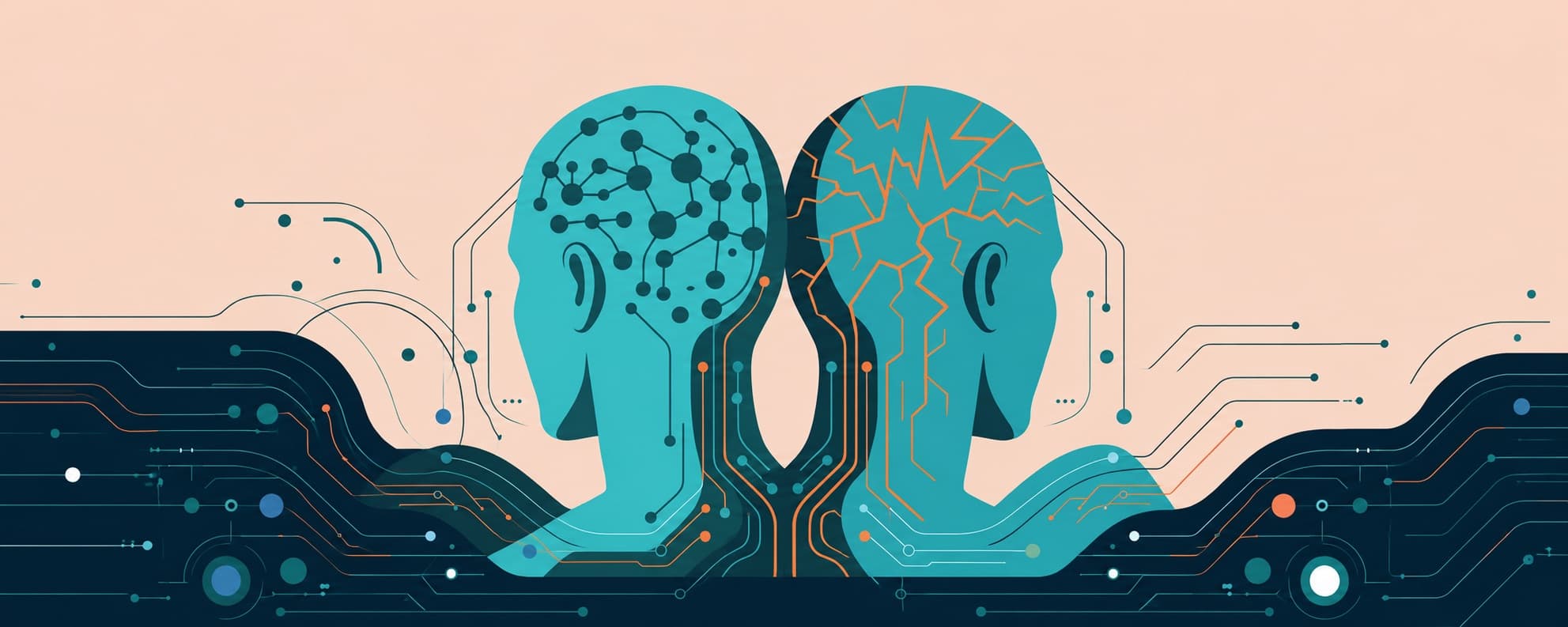
You've watched yourself trade. You know your patterns — or you think you do. You could tell a friend exactly how you behave under pressure, and exactly what you'll do differently next time.
Then the trade goes against you. Ninety seconds in, your chest tightens — and someone else takes the keyboard. Not the calm person who wrote the plan. Someone faster, sharper, harder to predict. You watch them click. And then you recognize your pattern again — too late, again.
That gap — between the trader you describe and the trader who shows up under pressure — is what a trading psychology test is really for. Most tests never see it. They measure the calm version of you — the one that was never the problem.
This article is about the difference between asking yourself how you behave and measuring how you behave. And about why, in trading, only the second one works.
What most "trading psychology tests" actually measure
Search "trading psychology test" or "trading psychology quiz" and you'll find the same format almost everywhere: a list of questions. How do you react to a losing streak? Do you stick to your plan? Are you patient or impulsive? You read the question, picture yourself, and pick the answer that sounds like you.
The catch is who's answering. You're sitting still, no money on the line, looking at a hypothetical. The version of you filling out the test is the calm version — the one that already knows the textbook answer. Nobody picks "I chase losses and revenge-trade" when that option is just sitting there in plain sight.
Self-report measures your self-image. And your self-image is exactly what drifts when the market leans on you. You're picking up a broken instrument and trying to measure yourself with it.
And that, by the way, is the honest answer to "what type of trader am I." You can't pull it out of a questionnaire — because a questionnaire reaches the part of you that watches, not the part that acts.
The calm you and the you under pressure are two different people
This isn't just a nice image. Under sharp stress, your decisions change. Slow, weighed-up judgment steps aside, and fast, automatic reactions come forward. Your horizon narrows. A loss looms larger in your eyes than an equal gain. The brain that calmly writes a trading plan on Sunday and the brain that holds a red position on Tuesday are running on different software.
So when you reflect on your behavior — in a journal, in a questionnaire, in your head on a walk — you reflect with the calm brain. It has no direct access to what the pressure brain was doing. It fills in the gaps after the fact, explains things in hindsight, and patches the holes with the story it prefers.
Where a personality test works — and where it doesn't
Big Five (OCEAN), MBTI, risk-tolerance questionnaires — they have real value, and Big Five is a well-validated model of personality. But they all share one ceiling: they're self-report. You're still describing yourself — and a description can be nudged, even when you don't mean to. On most personality questionnaires, you can produce exactly the portrait you want to see.
A behavioral test removes that lever. It doesn't ask how you'd act. It puts you in a situation, gives you something to do, and records what you actually did. Out of ten well-built behavioral tasks, nine are practically impossible to fake: there's no visible "right" answer to play toward, and you're reacting in real time, faster than you can dress yourself up.
But that doesn't mean you throw personality away. NST's tenth test — The Blueprint — is exactly an OCEAN map, a Big Five map: your openness, your conscientiousness, the things that make up a stable character. On its own, a personality test runs into the ceiling described above. But standing next to nine behavioral tests you can't fake, it adds the layer they can't reach — who you are not under pressure, but in general, as a steady disposition. Nine tests show how you behave in the moment; The Blueprint shows the personality underneath that behavior. Together — a full trader profile, and the map becomes whole.
What a behavioral experiment actually sees
Here's the turn. Instead of asking "how do you handle risk?", the test hands you a balloon and lets you pump it. Each pump is worth more. Pump too far and it bursts, and you lose what was riding on it. The test never asks about your appetite for risk — it reads it directly, from how far you push before you bank what you've got. (This is the Balloon Analogue Risk Task, a method that's decades old. At NST it's called The Bubble.)
Instead of asking "are you good at deciding under uncertainty?", another task gives you four decks. Two are quietly built to bleed you out over time; two pay more slowly but stay in the black. No one tells you the rules. The test watches how long it takes you to feel the bad deck and move away from it — or whether you keep coming back. (This is the Iowa Gambling Task. At NST it's The Four Doors, and it's free.)
Notice what changed. You told the test nothing about yourself. The test measured you on its own. What comes out isn't your opinion of your risk — it's your risk, the way it shows up in behavior. The same way it shows up when there's real money on the table.
And none of this is homemade. Every NST test is built on an established, peer-reviewed behavioral paradigm — methods used in research labs for decades, several of them rooted in Nobel-recognized work. What NST does is adapt them for traders: the same validated science, rebuilt around the decisions you actually make under pressure.
A behavioral test vs. a trading journal
A journal is the most common self-knowledge tool a trader reaches for, and it's worth keeping. But look at what it records. "Entered late on FOMO." "Revenge-traded after the morning loss." "Moved my stop." These are symptoms — descriptions of what happened, written after the fact by the calm narrator.
The journal tells you that you revenge-traded. It doesn't tell you why. The "why" lies further upstream — it's a property of how your system handles a particular kind of pressure. Maybe your impulse brake doesn't catch fast enough: the action has already started, and you can't pull it back in time. Maybe it's how steeply you discount the future when something is available right now. The journal sees the smoke. A behavioral test measures the fire itself.
That's the whole point — to measure the cause, not the symptom. You can write "I revenge-trade" for two years and keep revenge-trading, because the note never reaches the mechanism. A test that isolates the mechanism — how fast you can cancel an action you've started, how steeply you discount the future — gives you what a journal never will: the reason.
Know the problem, and you're already halfway to the solution.
I'm not a trader myself. NST grew out of two years of watching my partner — a day trader. A smart, disciplined person who could describe his patterns in words precisely. And under pressure, he behaved differently than he described himself. He could see himself — but not the essence of what he did. His own test results were my first piece of living proof: the issue isn't that someone doesn't know enough about the market — it's that he can't see himself in the very moment it matters most.
One test is a single point. The pattern shows up in the cross-analysis.
One behavioral result tells you about one tendency of yours. The picture gets sharper when the results are read together. A high appetite for risk on its own is just a number. High risk, plus shaky impulse control, plus a steep preference for "now" over "later" — that's already a recognizable pattern, and it predicts a very specific way of coming apart under pressure.
NST runs an AI cross-analysis across all your results and pulls out these links — the places where two or three tendencies stack into something bigger than any single score. That's the difference between a quiz result and a map. After the tests, you're holding a map.
This is self-awareness, not financial advice
To be clear and honest: NST doesn't tell you what to buy, when to enter, or which strategy to run. There are no signals, no setups, no "do this instead." It's not financial advice.
It's a mirror. The whole result is information about you: how you decide, how you handle risk, where your behavior bends under pressure. What you do with that is yours. Pure self-awareness, with nothing prescribed on top.
Start with the free test
If you've read this far, you're probably the kind of person who'd rather see the data than be told a nice story about themselves. Good. That's the whole idea.
Start with The Four Doors. It's free, it takes a couple of minutes, and it's that same Iowa Gambling Task: it measures how you decide when you don't know the rules and the outcome is hidden. You won't answer questions about yourself. You just play — and the test reads how you actually move when the deck is unknown.
You might recognize the trader who sits down at the keyboard. That recognition — seeing the pattern instead of describing the person — is the very first line on your map. When you can't see it, you move blind; when you can, you can stop yourself or give yourself a nudge. You came here without a map. The Four Doors is your first door. Open it.
FAQ
Can you fake a trading psychology test? On a questionnaire — yes, easily. You'll pick the answers that flatter you without even noticing. That's the weak spot of the format. On a well-built behavioral test — almost not at all: there's no obvious "right" answer to play toward, and you react in real time, faster than you can dress yourself up.
Is a trading psychology test the same as a personality test? No. Personality tests like Big Five are self-report — they ask you to describe yourself. A behavioral test puts you in a task and measures what you do. One captures your self-image, the other your behavior. In trading, behavior is what matters.
"What type of trader am I" — can a test tell me? Not as a label, and a label wouldn't help anyway. The useful answer is behavioral: how far you push risk, how fast you cancel an action you've started, how much weight you give the future versus the present. It's a map of how you work under pressure, not a tag.
Do you need trading experience to take it? No. The tests measure tendencies everyone has — attitude to risk, impulse control, decisions under uncertainty. You don't need experience to take them; it only changes how directly you'll recognize yourself in the results.